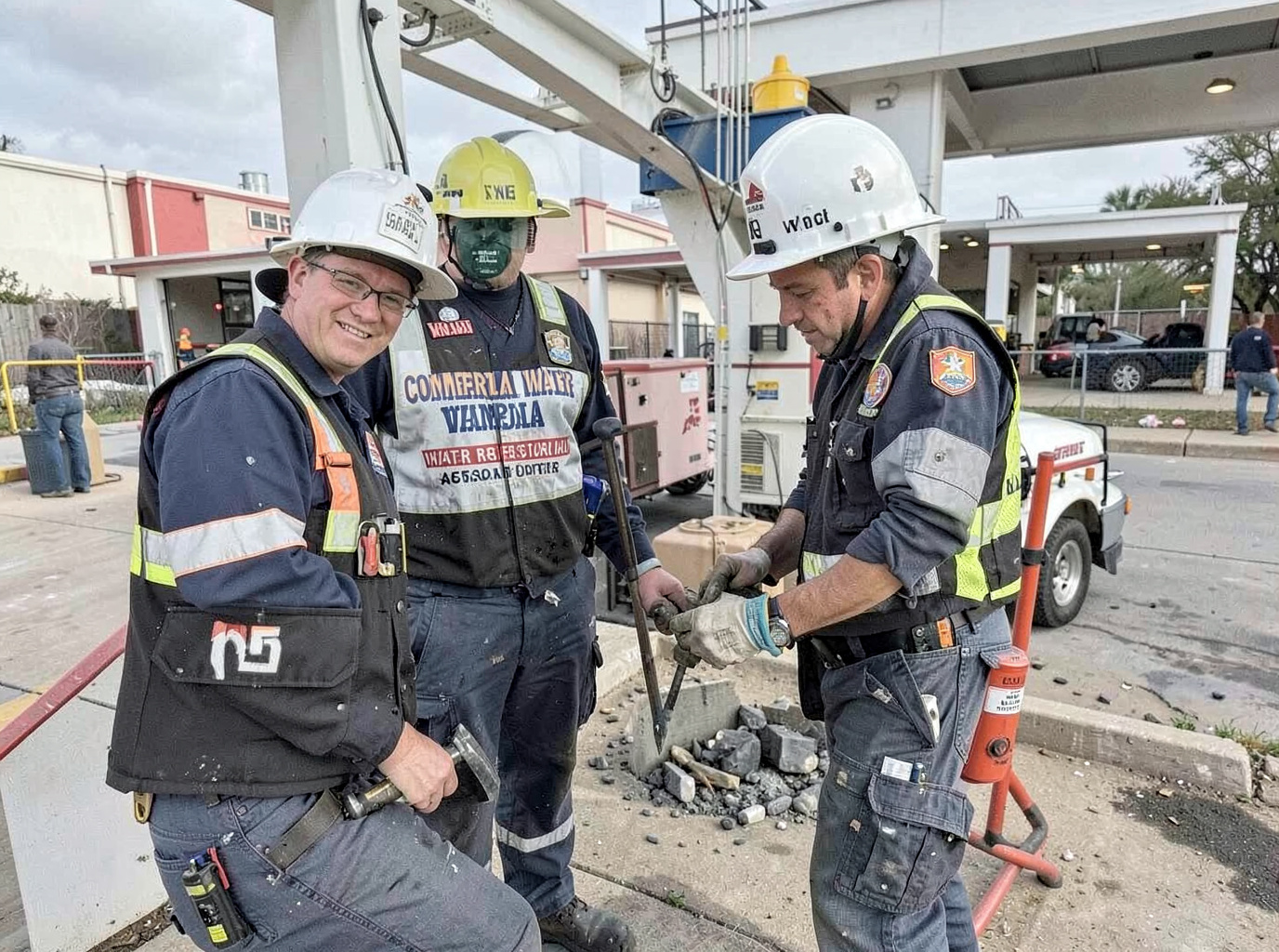
San Antonio commercial properties in Downtown and King William often sit in buildings from the early 1900s with brick and plaster construction that traps moisture behind walls after leaks from aging pipes or roof penetrations. Hot summers drive high humidity that slows natural drying and raises the risk of hidden mold growth in HVAC systems common to retail spaces near the River Walk. Technicians must map moisture with meters across multiple floors and coordinate with property managers to keep businesses running while extraction and dehumidification run.
Bexar County commercial jobs near Southtown frequently involve slab-on-grade foundations where water migrates under tile or epoxy floors, requiring removal of baseboards and targeted drying beneath to prevent warping. Mild winters still bring occasional heavy rains that overwhelm storm drains around The Alamo area, pushing water into lower-level storage and mechanical rooms. Work includes separating salvageable inventory, documenting affected square footage for insurance, and using air movers sized for the volume of each space rather than generic residential units.
Restoration crews check for code compliance on fire-rated assemblies and electrical panels when water reaches commercial kitchens or server rooms, avoiding shortcuts that could void occupancy permits. In Alamo Heights office buildings, ceiling plenums often hide ductwork that needs separate drying to stop odor transfer between suites. Final verification uses moisture readings below 12 percent before any reconstruction begins.
Technician insight
In San Antonio the thing that catches most people out with commercial water damage restoration is hidden moisture in the plaster and brick of 1920s buildings in King William and Downtown; hot summer humidity keeps those walls wet longer than expected and turns a simple extraction into weeks of monitoring if you skip the meter checks behind baseboards.
Southtown retail leak after heavy rain
Water entered a Southtown storefront through a roof seam during a summer storm and pooled under display flooring. Inspection showed moisture had wicked into the wall cavities of the older brick structure. Crews extracted water, ran targeted drying for ten days, and confirmed readings below threshold before the owner restocked.
Commercial Water Damage Restoration Services We Offer
✓Office Suite Water Extraction
Rapid removal of standing water from carpet, tile, and underfloor voids in multi-tenant buildings using commercial-grade pumps sized for larger square footage.
✓Retail Space Drying and Dehumidification
Placement of high-capacity dehumidifiers and air movers to control humidity in storefronts and stockrooms while minimizing disruption to daily sales.
✓Restaurant Kitchen Flood Recovery
Extraction and sanitization of grease-laden floors and equipment areas, followed by moisture mapping to protect electrical and refrigeration lines.
✓Warehouse Inventory Salvage
Separation and drying of palletized goods on concrete slabs, with documentation of affected stock for insurance claims in industrial zones.
✓Commercial HVAC Moisture Removal
Inspection and drying of ductwork and air handlers in older Bexar County buildings to prevent mold spread through shared ventilation systems.
Commercial Water Damage Restoration Cost in San Antonio, TX
| Service | Typical Range | What Affects It |
|---|---|---|
| Initial water extraction | $600–$1,800 | Depends on volume and access in multi-story buildings |
| Equipment drying package | $400–$1,200 | Daily rate for dehumidifiers and air movers |
| HVAC moisture removal | $350–$900 | Duct and air handler work in older commercial properties |
| Sanitization and clearance | $250–$650 | Treatment and final readings for insurance |
Ranges are typical for San Antonio, TX and confirmed with an exact written quote before any work starts.
How it works
- 1
Site Assessment
Technicians inspect the commercial space, document water source, and map moisture levels across floors and walls using meters.
- 2
Water Removal
Pumps and vacuums extract standing water from slabs, carpets, and voids while protecting fixtures and inventory.
- 3
Drying And Monitoring
Industrial dehumidifiers and air movers run with daily moisture checks until readings reach acceptable levels for the building type.
- 4
Sanitization And Clearance
Antimicrobial treatment is applied where needed, followed by final verification before any reconstruction or reopening.
Pricing
Upfront quotes after on-site inspection that account for square footage, water category, and drying duration.