2026-11-14 · Miguel Torres
Water Damage Repair After Summer Flash Floods in San Antonio
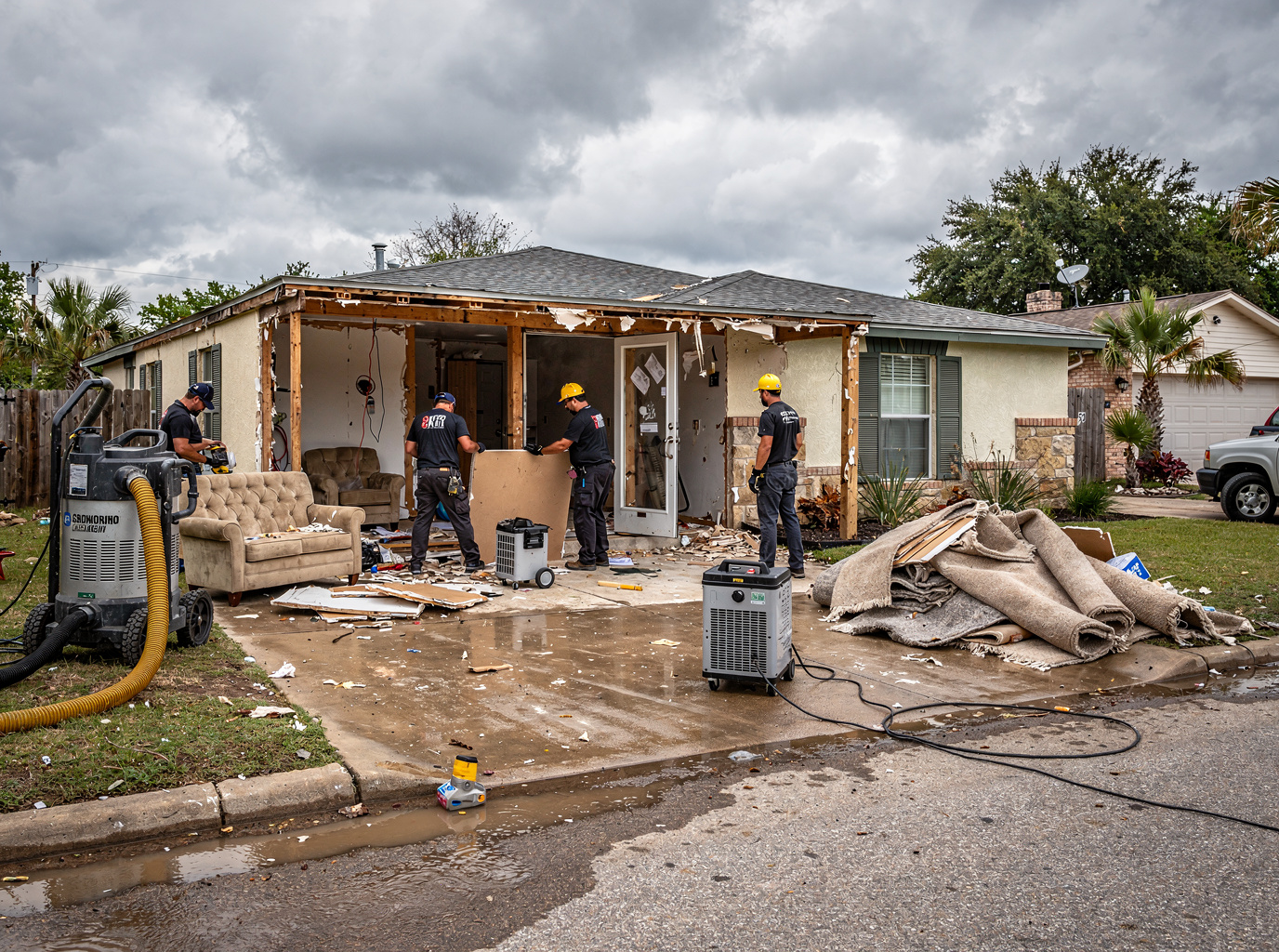
Water damage repair after summer flash floods in San Antonio starts with extraction within hours, followed by targeted drying that usually finishes in 4–7 days when crews reach affected homes in Downtown or Alamo Heights before mold sets in.
Immediate Extraction Steps After Flash Floods
San Antonio summers bring sudden downpours that overwhelm drainage near the River Walk and push water into crawlspaces of older Downtown properties. Crews begin by removing standing water with truck-mounted pumps, then pull carpets and baseboards in King William homes where slab foundations trap moisture. In Southtown bungalows built before 1950, technicians cut away saturated drywall up to 18 inches above the water line to expose wall cavities. This prevents hidden saturation that hot July temperatures turn into mold within 48 hours. Mild winters keep the ground soft year-round, so floodwater often seeps back in if exterior grading is not corrected during the same visit.
Drying and Monitoring in Local Housing Stock
Bexar County homes from the 1920s through 1970s in Alamo Heights and King William commonly have plaster walls and narrow crawlspaces that hold moisture longer than newer builds. After extraction, dehumidifiers rated at 70–150 pints per day run continuously while moisture meters track levels every 12 hours. Technicians place air movers at 45-degree angles to force evaporation from subfloors without spreading spores to unaffected rooms. In Southtown properties near the San Antonio Zoo, where summer humidity stays above 70 percent, crews add extra HEPA filtration to keep airborne particles below 0.3 microns. Drying logs are shared daily so homeowners see exactly when relative humidity inside walls drops below 50 percent.
Addressing Hidden Issues and Mold Risks
Flash floods often leave silt in HVAC ducts and behind kitchen cabinets in older Bexar County houses. Technicians pull registers and run negative-air machines for 24–48 hours to clear debris before any reconstruction. Checking for hidden leaks in older San Antonio homes becomes essential because cracked clay sewer lines from the 1940s frequently leak after heavy rain. When moisture readings stay elevated past day three, crews open additional wall sections rather than guessing. Hot summers accelerate mold on organic materials, so antimicrobial treatments are applied only after surfaces test dry. What affects water damage repair costs in San Antonio outlines how access to these tight spaces changes pricing.
Final Restoration and Prevention Measures
Once drywall and flooring are replaced, crews reinstall baseboards with 1/4-inch gaps at the bottom in flood-prone Alamo Heights homes to allow future drying. Sump pumps with battery backups are recommended for properties within two blocks of the River Walk where stormwater backs up quickly. Homeowners in Southtown and Downtown also benefit from French drains tied into existing city storm lines. Water damage repair crews document every step with photos so insurance claims move faster. Follow-up visits at 30 days confirm no recurring moisture from the original flood event.